NEUROLOGY 2004;63:838-842
© 2004 American Academy of Neurology
Recombinant hepatitis B vaccine and the risk of multiple sclerosis
A prospective study
Miguel A. Hernán, MD, DrPH, Susan S. Jick, DSc, Michael J. Olek, DO and Hershel Jick, MD
From the Department of Epidemiology (Dr. Hernán), Harvard School of Public Health, Boston; Boston Collaborative Drug Surveillance Program (Drs. Susan S. Jick and Hershel Jick), Boston University, Lexington, MA; and Department of Neurology (Dr. Olek), College of Medicine, University of California, Irvine.
Address correspondence and reprint requests to Dr. Miguel Hernán, Department of Epidemiology, Harvard School of Public Health, 677 Huntington Avenue, Boston, MA 02115; e-mail: miguel_hernan@post.harvard.edu
Background: A potential link between the recombinant hepatitis B vaccine and an increased risk of multiple sclerosis (MS) has been evaluated in several studies, but some of them have substantial methodologic limitations.
Methods: The authors conducted a nested case-control study within the General Practice Research Database (GPRD) in the United Kingdom. The authors identified patients who had a first MS diagnosis recorded in the GPRD between January 1993 and December 2000. Cases were patients with a diagnosis of MS confirmed through examination of medical records, and with at least 3 years of continuous recording in the GPRD before their date of first symptoms (index date). Up to 10 controls per case were randomly selected, matched on age, sex, practice, and date of joining the practice. Information on receipt of immunizations was obtained from the computer records.
Results: The analyses include 163 cases of MS and 1,604 controls. The OR of MS for vaccination within 3 years before the index date compared to no vaccination was 3.1 (95% CI 1.5, 6.3). No increased risk of MS was associated with tetanus and influenza vaccinations.
Conclusions: These findings are consistent with the hypothesis that immunization with the recombinant hepatitis B vaccine is associated with an increased risk of MS, and challenge the idea that the relation between hepatitis B vaccination and risk of MS is well understood.
Received March 31, 2004. Accepted in final form May 8, 2004.
Recombinant_hepatitis_B_vaccine_and_the_risk_of_MS.pdf
samedi 23 août 2008


vendredi 1 août 2008
Deux cas de maladies cérébrales affectant des patients sous traitement Tysabri
Elan et Biogen ont annoncé deux cas de maladies cérébrales affectant des patients sous traitement Tysabri de la sclérose multiple. Alors que le titre du Groupe de Dublin Elan poursuit son parcours en forme de chute libre ce vendredi, la valeur Biogen plonge de 25% à 52$ sur le Nasdaq Composite. Il y a trois ans, Tysabri avait déjà été retiré du marché pour des inquiétudes sur sa sécurité, avant un retour en 2006. L'annonce de la veille jette de nouveau le doute sur le blockbuster controversé.
mercredi 30 juillet 2008
Le régime pour lutter contre la SEP
màj le 28/03/2010 - alimentation et slérose en plaques
Les conseils d'alimentation d'Edgar Cayce pour guérir de la SEPEdgar Cayce indique que la sclérose en plaques provient d'un problème d'assimilation de certains micro-nutriments. Au bout d'un moment le corps n'a simplement plus les matériaux nécessaires pour construire les gaines qui entourent les nerfs, c'est le processus de démmyélinisation. Cayce nous indique quels aliments consommer pour pourvoir le corps en micro-nutriments qui lui manque le plus dans le cas de sclérose en plaques.
Il considère que c'est notamment l'or, présente naturellement en quantité infinitésimale dans certains aliments qui manque cruellement à l'organisme. Le problème est que si ces micro-nutriments sont mal absorbés, augmenter leur apport risque de na pas être suffisant puisqu'ils n'arrivent pas dans le corps d'où l'utilisation simultanée d'un autre traitement plus radical, la Wett-Cell qui utilise un autre moyen pour amener les matériaux nécessaires à l'organisme.
Autre point : éliminer les graissent animales car trop lourdes à digérer.
Mais de toute façon une correction de l'alimentation pour amener les micro-nutriments indispensables est absolument nécessaire et ceci sur le long terme pour avoir des résultats.
Voici les aliments nécessaires et ceux à éviter :
Voici les aliments nécessaires et ceux à éviter :
Cresson de fontaine


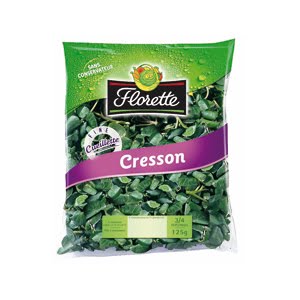
Cresson Florette 125 g à Monoprix : 2,70€ (07/08/2008)
Soupe bio de Cresson & lentilles : Naturalia
Disponible aussi chez Tang frères si vous êtes sur Paris 13.
Attention, l'été est la basse saison du cresson de fontaine.
Salsifis


Boite chez ATAC : 1.40€ (30/07/2008)
Céleri cru


Céleri rave rappé à Monoprix : 2,25€ (7/08/2008)
Le céleri bio en branche (photo 1) est de loin le plus agréable et sûrement efficace à consommer.

Carottes (contiennent de l'or)

Laitue (purifie le sang)
Haddock (contient de l'iode)
Fruits de mer (contient de l'iode)
Viande d'agneau
Volaille
Poisson

Toute forme de friture

Le Bœuf (à consommer seulement de manière occasionnelle)
Les Féculents
Les bananes si elle n'ont pas été cueillies proche de chez vous
Conseils personnels : Compléments alimentaires
Liste complète des conseils, en anglais, à traduire : Dietary Advice from the Edgar Cayce Readings


Boite chez ATAC : 1.40€ (30/07/2008)
Céleri cru


Céleri rave rappé à Monoprix : 2,25€ (7/08/2008)
Le céleri bio en branche (photo 1) est de loin le plus agréable et sûrement efficace à consommer.

Carottes (contiennent de l'or)

Laitue (purifie le sang)
Haddock (contient de l'iode)
Fruits de mer (contient de l'iode)
| Aliments | Teneur en iode en microgrammes pour 100 g |
| Huile de foie de morue | 838 |
| Aiglefin (appelé haddock lorsqu'il est fumé) | 318 |
| Saumon | 245 |
| Morue | 143 |
| Langoustines | 130 |
| Homard | 102 |
| Coquillages | 78 |
| Huîtres | 57 |
Viande d'agneau
Volaille
Poisson
Formellement interdit :

Toute forme de friture
A éviter :

Le Bœuf (à consommer seulement de manière occasionnelle)
Les Féculents
Les bananes si elle n'ont pas été cueillies proche de chez vous
Conseils personnels : Compléments alimentaires
- Huile de foie de flétan (Vitamine D)
- Magnésium
Liste complète des conseils, en anglais, à traduire : Dietary Advice from the Edgar Cayce Readings
mercredi 16 juillet 2008
Traitement à base de cellules souches
Situé aux Caraïbes.
Medra Inc.
Medra’s mission is to reduce the pain and suffering from many of mankind’s most devastating diseases (including some which traditional medicine still considers untreatable), by delivering the future promise of Fetal Stem Cell Therapy today.
Founded in 1995, Medra is a pioneer in stem cells and the leading provider of Fetal Stem Cell Therapy. Medra has already delivered the promise of Fetal Stem Cells to over one thousand patients, both children and adults.
Medra also treats patients for general wellness and longevity.
Medra was founded and is lead by Dr. William Rader, who serves as Medra’s medical director and chief scientist and has worked with Fetal Stem Cells for over 12 years.
Medra has offices and laboratories in California U.S.A., Georgia (The Former Soviet Republic), Germany and the Dominican Republic.
To find out more about the present day application of Fetal Stem Cells you can contact
Medra Inc. at:
Toll Free: (800) 386-9121
Direct: (310) 455-5300
Fax: (310) 455-5318
Email: medrainc@medra.com
samedi 14 juin 2008
Memory Loss Linked To Common Sleep Disorder
ScienceDaily (Jun. 13, 2008) — For the first time, UCLA researchers have discovered that people with sleep apnea show tissue loss in brain regions that help store memory. Reported in the June 27 edition of the journal Neuroscience Letters, the findings emphasize the importance of early detection of the disorder, which afflicts an estimated 20 million Americans.
Sleep apnea occurs when a blocked airway repeatedly halts the sleeper's breathing, resulting in loud bursts of snoring and chronic daytime fatigue. Memory loss and difficulty focusing are also common complaints. Prior studies have linked the disorder to a higher risk of stroke, heart disease and diabetes.
"Our findings demonstrate that impaired breathing during sleep can lead to a serious brain injury that disrupts memory and thinking," said principal investigator Ronald Harper, a distinguished professor of neurobiology at the David Geffen School of Medicine at UCLA.
The study focused on structures called mammillary bodies, so named because they resemble small breasts, on the underside of the brain.
The UCLA team scanned the brains of 43 sleep apnea patients, using magnetic resonance imaging (MRI) to collect high-resolution images of the entire brain, including slices of the mammillary bodies.
The structures' small size and proximity to bone and fluid make them difficult to measure by conventional MRI. So the researchers manually traced the mammillary bodies from the high-resolution scans and calculated their volumes from the hand-drawn outlines.
When they compared the results to images of 66 control subjects matched for age and gender, the scientists discovered that the sleep apnea patients' mammillary bodies were nearly 20 percent smaller, particularly on the left side.
"The findings are important because patients suffering memory loss from other syndromes, such as alcoholism or Alzheimer disease, also show shrunken mammillary bodies," said lead author Rajesh Kumar, a UCLA assistant researcher in neurobiology.
"Physicians treat memory loss in alcoholic patients with massive amounts of thiamine, or vitamin B1," he added. "We suspect that the dose helps dying cells to recover, enabling the brain to use them again."
The scientists' next step is to determine how sleep apnea causes tissue loss in the mammillary bodies.
Harper hypothesizes that repeated drops in oxygen lead to the brain injury. During an apnea episode, the brain's blood vessels constrict, starving its tissue of oxygen and causing cellular death. The process also incites inflammation, which further damages the tissue.
"The reduced size of the mammillary bodies suggests that they've suffered a harmful event resulting in sizable cell loss," Harper said. "The fact that patients' memory problems continue despite treatment for their sleep disorder implies a long-lasting brain injury."
In a future study, Harper and Kumar will explore whether taking supplemental vitamin B1 helps restore sleep apnea patients' memory. The vitamin helps move glucose into the cells, preventing their death from oxygen starvation.
"UCLA researchers used sophisticated imaging technology to identify brain lesions associated with impaired memory in individuals with obstructive sleep apnea," said Elizabeth G. Nabel, director of the National Heart, Lung and Blood Institute, which funded the study. "These results underscore the importance of early diagnosis and treatment of sleep-disordered breathing, which can have long-term effects on patients' health and well-being."
Obstructive sleep apnea occurs when the muscles in the throat, soft palate and tongue relax during sleep and sag, narrowing the airway. The tongue slides to the back of the mouth, blocking the windpipe and cutting off oxygen to the lungs.
The sleeper wakes up, gasping for air, and falls back into a fitful sleep. The cycle can repeat itself hundreds of times per night.
Study co-authors included Bramley Birrer, Paul Macey, Mary Woo and Frisca Yan-Go of UCLA, and Rakesh Gupta from the Sanjay Gandhi Institute of Medical Sciences, India.
Adapted from materials provided by University of California - Los Angeles, via EurekAlert!, a service of AAAS.
vendredi 13 juin 2008
Insomnia in parents can result in sleep problems, suicidal behavior among their offspring
WESTCHESTER, Ill. – A history of chronic insomnia in parents is not only associated with elevated risk for insomnia but also with elevated risks for use of hypnotics, psychopathology and suicidal behavior in adolescent offspring, according to a research abstract that will be presented on Thursday at SLEEP 2008, the 22nd Annual Meeting of the Associated Professional Sleep Societies (APSS).
The study, authored by Xianchen Liu, MD, PhD, of the University of Pittsburgh, focused on 798 teenagers (450 boys and 348 girls), with an average age of 14.4 years, who completed a sleep and health questionnaire.
According to the results, compared with adolescents of parents without insomnia, participants of insomnia parents were more than twice more likely to report insomnia, daytime fatigue, and use of hypnotics. Adolescents of insomnia parents were also more likely to have depression, anxiety, and suicidal ideation and suicide attempts during the past year.
“These results suggest that a history of chronic insomnia in parents is not only associated with elevated risk for insomnia, but also with elevated risks for a wide range of mental health problems, substance use, and suicidal behavior in adolescent offspring,” said Dr. Liu. “Family sleep interventions may be important to enhance sleep quality and decrease risks for sleep disturbance, psychopathology and suicidal behavior in adolescents. Further studies are warranted to examine how and the extent to which genetic and environmental factors interact in determining sleep disturbances and psychopathology among adolescents.”
Insomnia is a classification of sleep disorders in which a person has trouble falling asleep, staying asleep or waking up too early. It is the most commonly reported sleep disorder.
It is recommended that adolescents get nine hours of nightly sleep.
The American Academy of Sleep Medicine (AASM) offers the following tips on how to get a good night’s sleep:
- Follow a consistent bedtime routine.
- Establish a relaxing setting at bedtime.
- Get a full night’s sleep every night.
- Avoid foods or drinks that contain caffeine, as well as any medicine that has a stimulant, prior to bedtime.
- Do not stay up all hours of the night to “cram” for an exam, do homework, etc. If after-school activities are proving to be too time-consuming, consider cutting back on these activities.
- Keep computers and TVs out of the bedroom.
- Do not go to bed hungry, but don’t eat a big meal before bedtime either.
- Avoid any rigorous exercise within six hours of your bedtime.
- Make your bedroom quiet, dark and a little bit cool.
- Get up at the same time every morning.
Those who suspect that they might be suffering from insomnia, or another sleep disorder, are encouraged to consult with their primary care physician or a sleep specialist.
###
More information about insomnia is available from the AASM at http://www.SleepEducation.com/Disorder.aspx?id=6, and “teens and sleep”, including a new questionnaire that assesses the level of sleepiness in adolescents, at: http://www.SleepEducation.com/Topic.aspx?id=71.
The annual SLEEP meeting brings together an international body of 5,000 leading researchers and clinicians in the field of sleep medicine to present and discuss new findings and medical developments related to sleep and sleep disorders.
More than 1,000 research abstracts will be presented at the SLEEP meeting, a joint venture of the AASM and the Sleep Research Society. The three-and-a-half-day scientific meeting will bring to light new findings that enhance the understanding of the processes of sleep and aid the diagnosis and treatment of sleep disorders such as insomnia, narcolepsy and sleep apnea.
SleepEducation.com, a patient education Web site created by the AASM, provides information about various sleep disorders, the forms of treatment available, recent news on the topic of sleep, sleep studies that have been conducted and a listing of sleep facilities.
samedi 24 mai 2008
US launches clinic to delve into mysterious diseases
WASHINGTON (AFP) — The US National Institutes of Health has launched a new clinical research program that will try to unlock the mysteries behind diseases that baffle the medical community.
The infrastructure for the Undiagnosed Diseases Program was put in place last month and it will begin to accept patients in July, the government agency based in the Washington suburb of Bethesda, Maryland said Monday.
"A small number of patients suffer from symptoms that do not correspond to known conditions, making their care and treatment extraordinarily difficult," said NIH director Elias Zerhouni.
"However, the history of biomedical research has taught us that careful study of baffling cases can provide new insights into the mechanisms of disease -- both rare and common."
The patients will be evaluated by 25 of the institutes' senior attending physicians specialized in endocrinology, immunology, oncology, dermatology, dentistry, cardiology and genetics.
The program will be directed by William Gahl, an expert on rare genetic diseases and the clinical director at the NIH's National Human Genome Research Institute.
On the Net:
- US National Institutes of Health: http://www.nih.gov/news/health/may2008/nhgri-19.htm
Inscription à :
Articles (Atom)


 Articles


